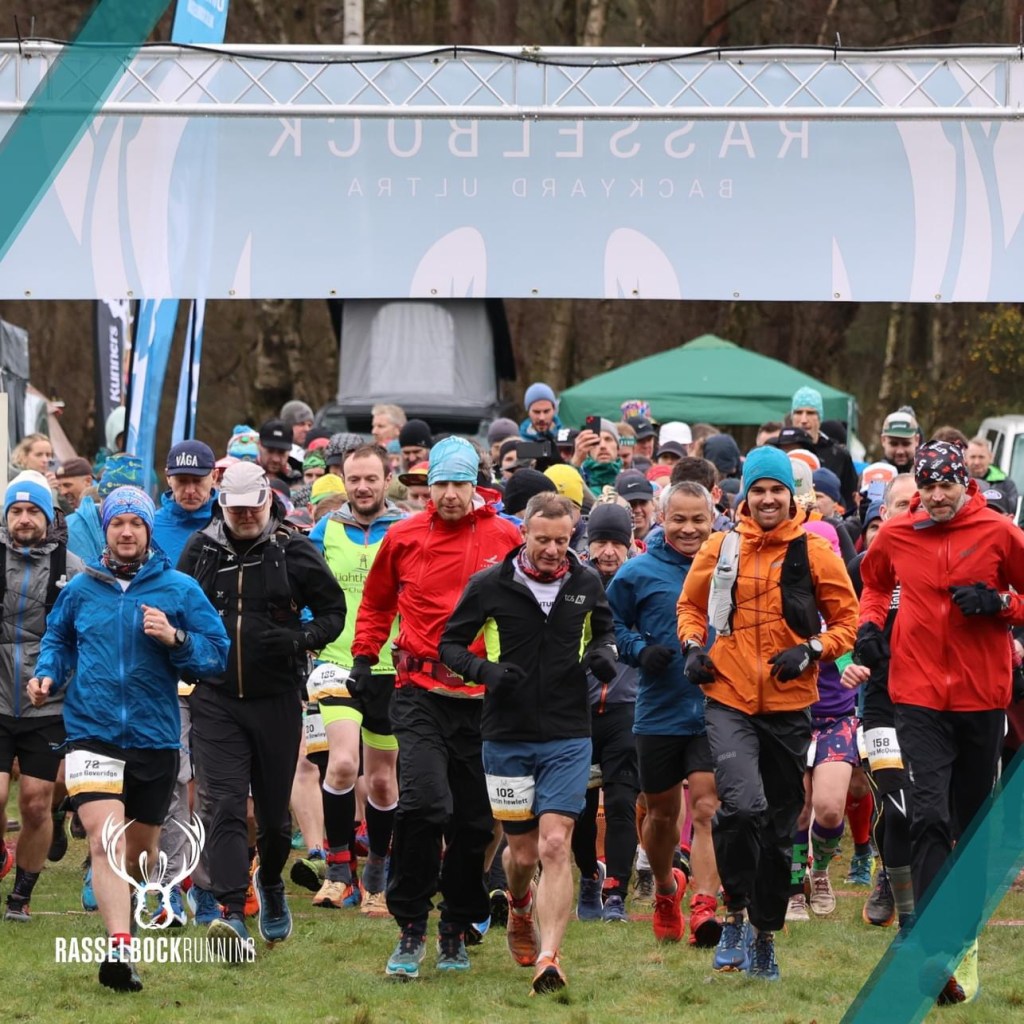
In the realm of running, few events challenge the spirit and body as thoroughly as a Backyard Ultra. Unlike traditional races marked by fixed distances, this event embraces a unique format: participants must complete a 4.167-mile loop every hour, on the hour, until only one runner remains.
The allure of the Backyard Ultra is not just in the distance but in the relentless challenge it poses to both the mind and body. Having previously participated in the Highlander Last One Standing, where I successfully completed 12 yards (50 miles) during the summer, my fascination with this unique format was well-founded. That event I deliberatey stopped at 12 yards, conserving energy for the Devil of The Highlands, my A race that was merely three weeks away. The experience was exhilarating, leaving me yearning for another opportunity to test my limits without restraint.
Training for a Backyard Ultra
The road to Rasselbock Backyard Ultra was part of a bigger picture, with my sights set on the West Highland Way Race, 95 miles through epic trails of Scotland in June. Training for Rasselbock, really fell into the training for the West Highland Way, but I did have an opportunity to try out something different – a 3x3x3 birthday challenge: 3 miles every 3 hours for 3 whole days. I was inspired following my attempt at the David Goggins 4x4x48 challenge last year, and thought, as it was my 33rd birthday, why not make it all about the 3’s? It wasn’t as tough as it sounds! It was the perfect prep, leaving me feeling pumped and pretty darn confident.
All the gear and nae idea?
My trusty Hoka Speedgoats, oh, where would I be without them? They have got me through all my trail ultras I have completed so far, but in particular, got me through the Highlander without a single hiccup, so it was a no-brainer to stick with them. Knowing I could get 12 hours with no issues in them, they were the gear of choice!
With a wet weekend forecasted, I packed my bag with enough gear changes to open a small shop, ready for whatever the sky decided to throw at me. Literally 10 changes on tops, and socks, spare shorts, a million buffs…A LOT! And for those night runs? I did my homework and grabbed a Fenix headtorch, known for being super bright and long-lasting, to light up my way.

The Starting Line: A Nervous Beginning to an Exhilarating Day
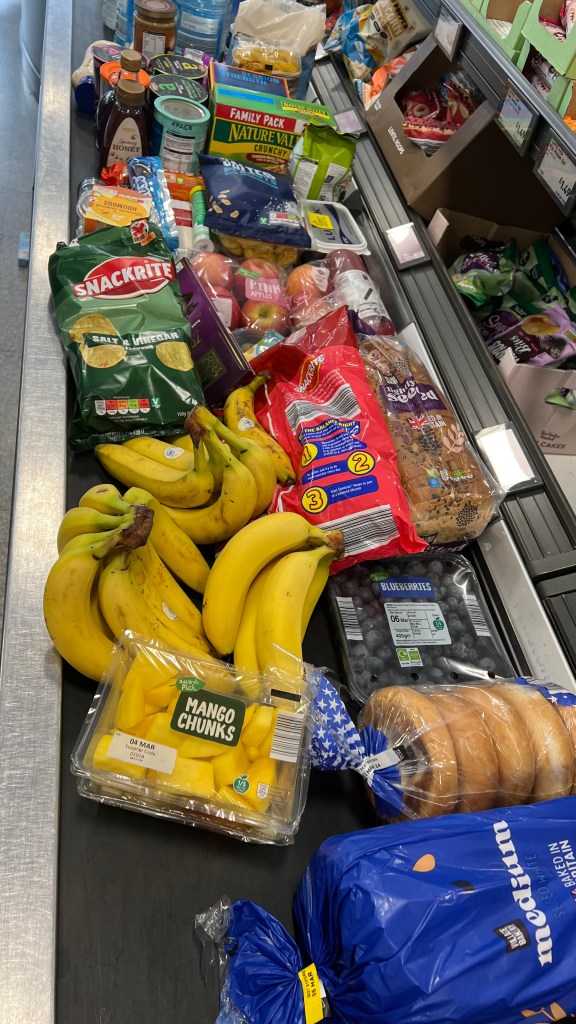
We headed down to England on the Thursday as we were picking up our very own shiny new campervan on the Friday! Which meant we had to then spend Friday running around all the shops getting the van kitted out with essentials, as well as stocking up on all my much-needed run supplies! Food, food and more food! This was probably not the best pre-race prep, but we enjoyed the adventure and I did my best to manage the stress.

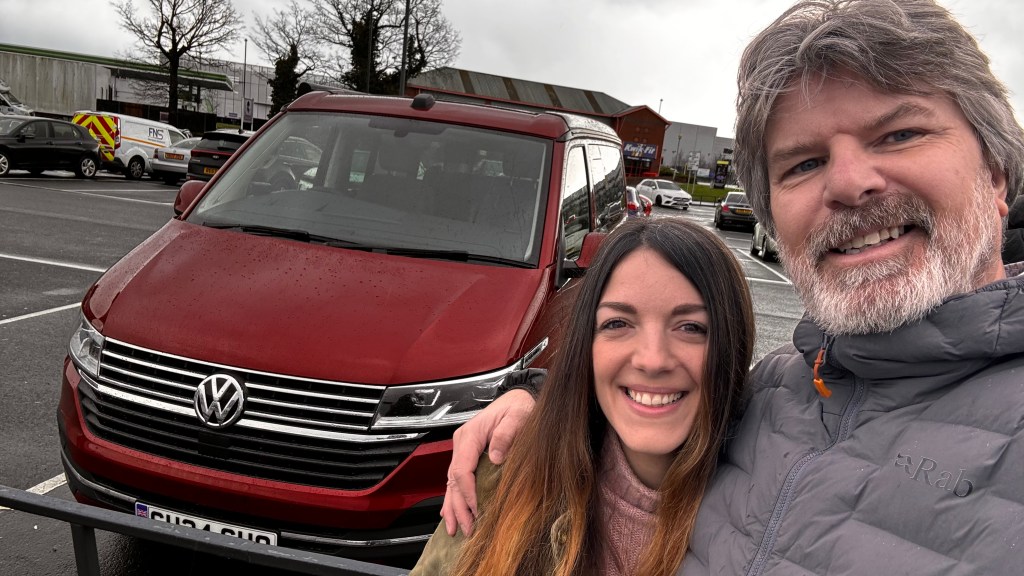
We arrived nice and early on the Saturday morning with the heaven’s opening up and relentless rain lashing down. Thankfully we had our shiny new campervan to keep us dry! There was such a great buzz around the place despite the rain, and I got to bump into some friendly faces, some I had met before, others only virtually.
Standing at the starting line of the Rasselbock Backyard Ultra, my stomach was a knot of nerves and excitement. But as I rounded off my first loop, the jitters faded, replaced by a surprising sense of calm. The route was lovely, weaving through the woods of Sherwood Pines forest, fleeing past the public playing around on Go-Ape, and chatting away to whoever wanted to listen. There was a tricky patch of mud, which I remember thinking “this will be fun at night”…
Backyard ultra Strategy
Now, let’s talk about my secret weapon, and no, it’s not just my ability to eat a banana while running without face-planting. It’s my meticulously crafted spreadsheet—the kind that would make an accountant weep with joy. This wasn’t just any old list. Oh no. It was a masterpiece of timing and nutrition, carefully plotted to guide Michael through the culinary chaos of ultra-support. It said, in no uncertain terms, “At hour X, feed me Y, or watch me turn into a cranky gremlin”, or something along those lines.
Our strategy was simple: eat every 30 minutes, and for the love of all that is holy, keep the calories coming. I’m on a first-name basis with every banana and date within a five-mile radius, and peanut butter and jam sandwiches are my bread and butter (pun absolutely intended). But given the Herculean task ahead, I decided to spice up the menu. Enter stage left: biscuits, crisps, and some instant hot food that I’d never tried before…(remember…nothing new on race day!).


The night-time loops I found I preferred, after running 6 loops of daylight, at 6pm the darkness loomed in and I found that time just melted away. Michael, bless his heart, turned into a barista-slash-chef, crafting cups of tea and coffee through the night, each loop ended with me bolting back to our campervan, eager for whatever warm concoction awaited. It was like a caffeine-fueled pit stop, where the goal was to refuel my spirit as much as my stomach. However…this strategy would soon start to crack…
Backyard Ultra Loop Life: A Race Against Time
If you’ve ever wondered what it’s like to live your life in 52-minute increments, welcome to my world during the Rasselbock Backyard Ultra. Here’s the breakdown: 52 minutes of running, which left me 8 precious minutes to pretend I was on a very stressful game show called “Ultra Runner Pit Stop.” The challenges? Eat, hydrate, bathroom break, and gear check.
I had this race mapped out like a treasure hunter plots a course to lost gold. Along the route, I placed mental (and sometimes physical) markers. “If you’ve reached the Big Pyllon and aren’t eating a sandwich, you’re behind schedule!” This high-stakes game of benchmarks and snacks was the strategy that kept me moving, a delicate balance between running, walking, and snacking—my three favourite activities!


I opted to carry my run vest during the loops. Sure, it’s a bit bulky, and probably unnecessary for most, but for me, it does come in handy. Water? Check. Spare biscuits and bananas? Double check. It means that if I am short for time at the end of the loop, I’ve always got enough stuff with me to keep me going another loop or two. And I much prefer sipping away at water rather than guzzling in one go.
This approach to the loops might sound like overkill to the uninitiated, but in the ultra-running world, it’s just another Tuesday. Or, in my case, a very long Saturday that bled into Sunday. And let’s not forget the entertainment value. Nothing says “I’m a fun person” quite like whipping out a sandwich mid-conversation or offering a passer-by a date (the edible kind, to be clear) as you merrily jog along. It’s the little moments like these that make the endless loops bearable, turning a gruelling endurance challenge into an adventure I’d sign up for again in a heartbeat—just maybe after a good long nap.


Night Falls, and So Does My Appetite
Our grand plan had all the hallmarks of brilliance. However, it met its nemesis around midnight, when the very thought of solid food turned my stomach into a swirling vortex of “nope.” Chewing became a Herculean task, and my once beloved bananas looked as appealing as a pair of soggy socks. Despite Michael’s valiant efforts, my calorie intake plummeted, turning each loop into a gamble of wills between my body and my brain.
This, my friends, was the unexpected plot twist in our ultra-marathon movie. The part where the hero faces a seemingly insurmountable obstacle: the Midnight Munchies Meltdown. It was a harsh lesson in the delicate art of ultra fuelling, one that had me eyeing the potential of liquid calories with newfound respect.
After 6 hours, and almost 30 miles later, fuelled by no more than a banana, a bag of crisps and a biscuit, my race came to an end. My energy waned, and my pace slowed to a crawl. I had no choice but to concede to my body’s demands for sustenance over stubbornness. Michael’s insistence pushed me into one last loop, a “victory lap” that ended not with a sprint but a concession to my empty fuel stores and shivering body. Opting to be timed out rather than quit outright, I embraced the end of my journey with mixed emotions: disappointment mingled with pride.
Backyard Ultra Family
Hanging out at the Rasselbock Backyard Ultra felt like being part of the world’s most exhausted social club. Here, amidst the mud and miles, I found myself collecting stories and friendships. We swapped war stories from the trenches of other races, shared our “why I run” philosophies (spoiler: still figuring that one out), and even touched on future dream runs. All this, of course, while trying not to trip over roots or our own feet.
conversations were the secret sauce to surviving the backyard ultra. They transformed what could have been solitary circles of despair into a collective adventure. There’s something about sharing a laugh (or a groan) over the absurdity of our self-imposed challenges that bonds you faster than superglue.
Reflections at Dawn: 19 Backyard Ultra Yards
As I warmed up with a cup of tea and eating my porridge, wrapped in my Dry Robe that felt like a hug, I couldn’t help but reflect on the journey. Eighty miles was a testament not just to my legs but to the support, strategy, and spirit of everyone involved. The lessons were clear: nutrition, especially in the dark hours, is as crucial as the will to continue. Yet, the disappointment was fleeting, overshadowed by the immense pride in how far I’d come and the knowledge that with a few tweaks, further distances weren’t just possible—they were inevitable.
Let’s not forget the accomplishments for the winner of the backyard ultra – Mike Raffan, with an outstanding 42 yards, or 175 miles in real money! And Sarah Perry getting the assist with 41 yards, and also smashing the previous GB women’s backyard record! It was an honour to meet them and they continue to inspire me to keep pushing to find my limit.
Q&A: Insights from the Rasselbock Backyard Ultra
Q: Did you manage to get any sleep during the event? How?
A: No, I never felt I needed to during this event. I think the adrenaline and buzz about the event kept me alert through the night hours. I suspect if I endeavour to go longer, then 2-minute naps may be added into the strategy!
Q: Did your crew get any rest, or were they up the whole time supporting you?
A: Michael was my crew and managed to get 20 minute naps during the night when I was out running a loop. He set an alarm to make sure he woke up to get the next bit of fuel or coffee ready for me coming back. Although there was one loop he never woke up!!
Q: What was the toughest part of the race for you, mentally and physically?
A: The mud! I think it didn’t help seeing it as a negativity at the start so it was always a slog at that point in the loop. And it does also physically take it’s toll too!
Q: Any specific gear or nutrition that you found indispensable during the race?
A: Beyond my trusty Hoka Speedgoats, my Fenix headtorch was a game-changer for night running. Nutrition-wise, I relied on a mix of real food like bananas and peanut butter sandwiches. The trick was consuming foods that were energy-dense but easy on the stomach.
Q: How did you deal with the psychological challenge of not knowing when the race would end?
A: I focused on the loop in front of me, treating each one as its own race. This helped keep the overwhelming thought of “how much longer” at bay. Mentally breaking down the race into manageable segments made the indefinite length more bearable.
Q: Any advice for someone looking to take on their first Backyard Ultra?
A: Start with a solid base of endurance training and don’t underestimate the mental aspect. Practice long runs that mimic the race’s loop format if possible. Also, get your nutrition and recovery strategies down during training. Most importantly, believe in yourself and your preparation. Every loop completed is a victory in itself. And it is so much fun!
Q: Did you find yourself changing clothes throughout the event?
A: Surprisingly, no. Even though I was geared up with a wardrobe ready for anything, I stayed dry and warm enough to stick with my original outfit. Sure, I was a bit chilly at the starting line, but about five minutes into each loop, I’d warm up just fine. The real game changer? Changing my socks every four hours. It’s incredible how much of a difference fresh socks can make — felt like a mini refresh for my feet each time.
Q: How did you tackle the colder temperatures, especially at night?
A: Warming up quickly into each loop was crucial. I made sure to start moving with purpose from the get-go, which helped stave off the cold. My initial outfit choice was spot-on for insulation and breathability, which meant I could focus on the race rather than shivering through the night. And gloves! The one’s I wore were fleece lined but waterproof on the outside so they were perfect. And when I got too warm, I could just put them away into my vest.
Q: Any tips on foot care during such a long and demanding race?
A: Regular sock changes were my secret weapon. Keeping your feet dry and comfortable can make a world of difference in how you feel overall. Also, choose shoes that you trust, ones that have seen you through long distances before. I’ve never tried, but I hear a good foot powder or cream can help prevent blisters and chafing.
Q: During the race, did you pause your watch between each lap?
A: No, I kept my watch running the whole time. What I did instead was turn off the auto-lap feature and switched my watch display to just show the time of day. At the start and end of each lap, I manually hit the lap button. This approach allowed me to keep track of my performance without getting bogged down by constant notifications, and it gave me a clear picture of my average lap times for a post-race review. I used a Coros Pace 2 for this, which was lightweight and had just the right features for the job.
Q: How important was time management during the event?
A: Time management was absolutely critical. Since the format of the race requires completing a loop every hour, keeping a close eye on pacing and allowing time for recovery and refuelling between loops was a balancing act. The manual lap timing helped me stay on track without stressing over each second.
Q: What was your strategy for staying within the hour for each loop?
A: My strategy revolved around consistency. I aimed to complete each loop with enough time to spare for recovery, usually targeting to finish in a specific window that allowed for nutrition, hydration, and a bit of rest. By monitoring my lap times with the manual lap function, I could adjust my pace as needed to ensure I wasn’t cutting it too close to the hour mark.
Q: Any advice on using tech gadgets like watches during such demanding races?
A: Definitely. Choose a watch that’s reliable, with a long battery life and the specific features you need. For the Rasselbock Backyard Ultra, simplicity was key for me — knowing the time of day and being able to manually mark laps was all I needed. Make sure you’re familiar with your watch’s settings, like turning off unnecessary alerts or features that could distract you or drain the battery. And practice with it during training so there are no surprises on race day.
Q: After everything you’ve been through, would you take on the Rasselbock Backyard Ultra again?
A: Absolutely, without a second thought. There’s something about backyard ultras that’s captured my heart. I’m already eyeing a return to the Highlander. Although, I’m fully aware of its timing close to the West Highland Way race, which makes recovery a bit of a puzzle. But the love for the event and the route pulls me back. And there’s Golspie in November on my radar, too. As for the Rasselbock BYU, I’m all in for giving it another go, especially the September edition — fingers crossed for less mud next time!
Q: What draws you back to these backyard ultras?
A: It’s the combination of mental and physical endurance, the community, and the unique challenge each race presents. Every backyard ultra has its own flavour, its own set of challenges, and I love the unpredictability. Plus, there’s a sense of camaraderie and shared adventure among the runners that you don’t find in many other types of races.

 The Happy Diet
Leave a Reply